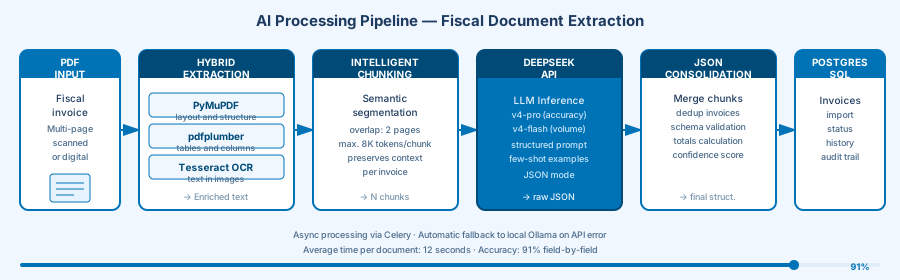
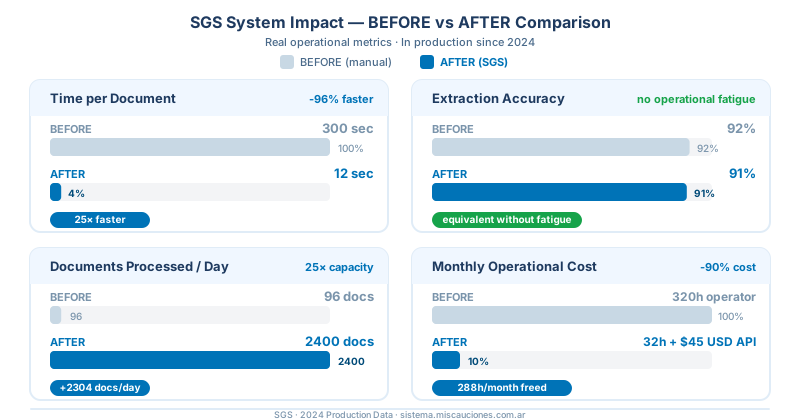
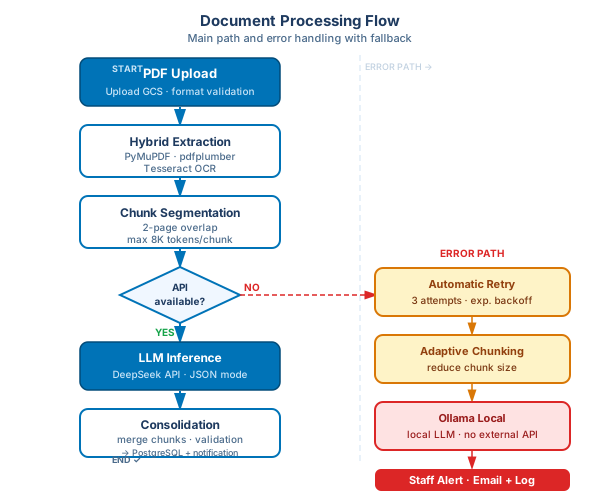
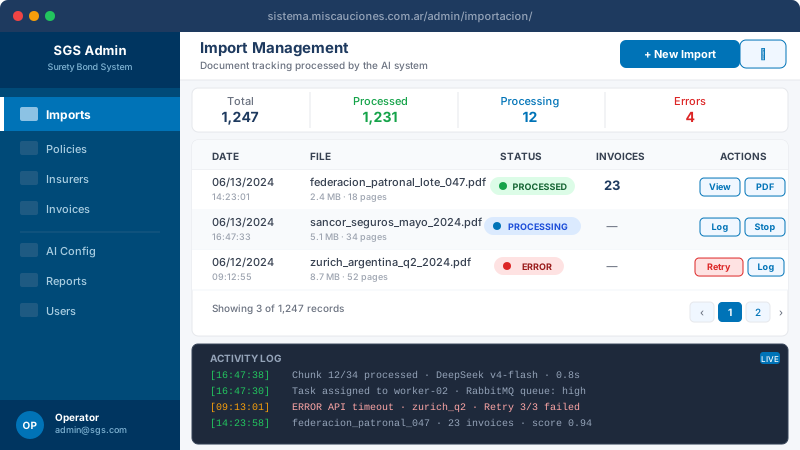
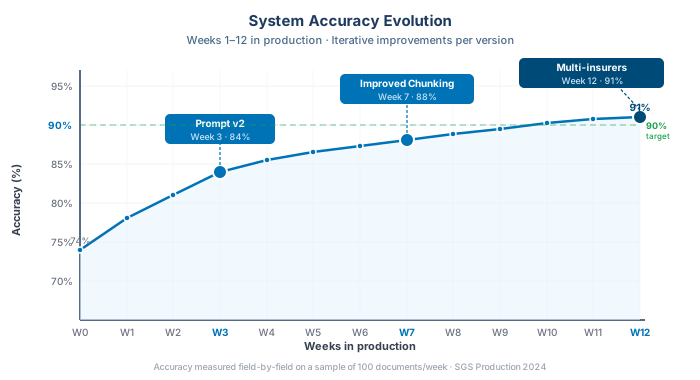
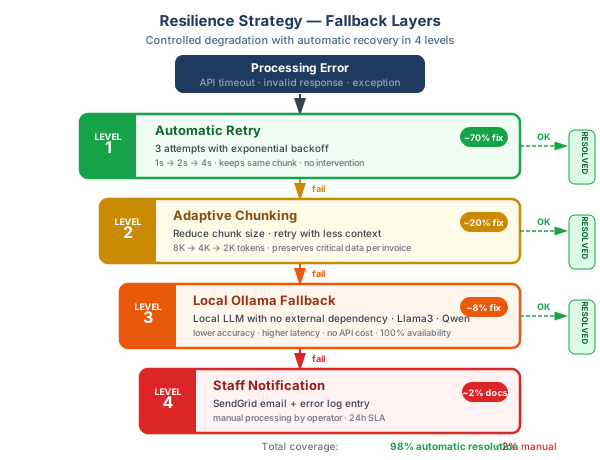
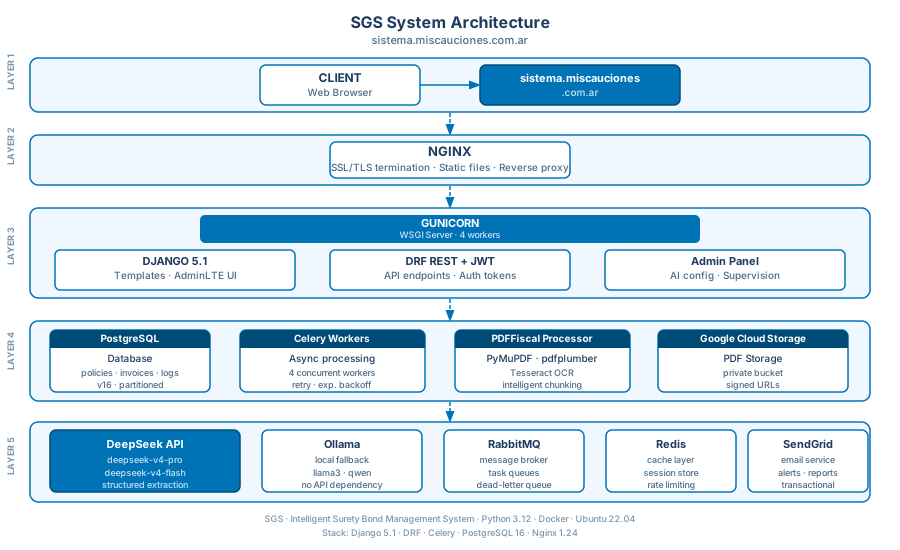
System diagram
Technology stack
Django 5.1 + DRF
Robust framework, ORM, auto admin
DeepSeek API
1M token context, native JSON
Ollama (local)
Offline fallback, zero API cost
PostgreSQL
Transactional integrity, native JSON
Celery + Redis + RabbitMQ
Mass async processing
Google Cloud Storage
Scalability for PDFs
PyMuPDF + pdfplumber
Layout + tables + OCR (Tesseract)
pandas + openpyxl
Excel-based imports
SendGrid
Transactional notifications
Sentry SDK
Production error monitoring
Gunicorn + Nginx
WSGI server + SSL reverse proxy
AdminLTE + Bootstrap 4
Reusable responsive UI
Hybrid extraction pipeline
Python
def extract_hybrid_content(self, pdf_source) -> Dict[str, Any]:
    """
    Hybrid system combining multiple extraction methods.
    PyMuPDF → visual layout · pdfplumber → tables · Tesseract → OCR
    """
    content = {
        "raw_text": "", "structured_text": "",
        "tables": "", "metadata": "", "has_images": False,
        "extraction_method": self.extraction_method,
    }

    # Method 1: PyMuPDF for general visual layout
    if 'layout' in self.config['EXTRACTION_METHODS']:
        content["structured_text"] = self.extract_text_with_layout(pdf_source)

    # Method 2: pdfplumber for table detection
    if 'tables' in self.config['EXTRACTION_METHODS']:
        content["tables"] = self.extract_tables_with_pdfplumber(pdf_source)

    # Method 3: Check if OCR is needed (scanned document)
    needs_ocr = self._needs_ocr(pdf_source)
    if needs_ocr and self.use_ocr:
        content["raw_text"] = self._extract_with_ocr(pdf_source)
        content["extraction_method"] = "ocr"
    else:
        # Combine structured text and tables
        content["raw_text"] = content["structured_text"] + "\n\n" + content["tables"]

    # Fallback to basic text if previous methods fail
    if not content["raw_text"].strip():
        content["raw_text"] = self.extract_text_from_pdf(pdf_source)

    return content
Retry strategy and error handling
Python
try:
    # Direct processing with DeepSeek
    return self._process_with_deepseek(full_prompt)

except APIConnectionError as error:
    # Connectivity error → notify and stop
    error_msg = f"DeepSeek API connection error: {str(error)}"
    return {"status": "error", "errors": [error_msg]}

except APIStatusError as error:
    # HTTP error (402, 429, 500, etc.)
    if error.status_code == 402:
        # Notify staff via email: balance exhausted
        send_email.delay(
            subject="Error 402 - DeepSeek API Payment Required",
            message=f"Error processing PDF. Balance exhausted.",
            email=list(User.objects.filter(is_staff=True)
                       .values_list('email', flat=True))
        )
    return {"status": "error", "errors": [str(error)]}

except BadRequestError as error:
    # Malformed prompt → do not retry
    return {"status": "error", "errors": [str(error)]}

except Exception as error:
    # Unknown error → fallback to iterative chunk processing
    if hasattr(pdf_file, 'seek'):
        pdf_file.seek(0)
    return self.process_large_pdf_iteratively(
        pdf_file, process_name, filename)
Prompt engineering: structured JSON response
Python
# DeepSeek call with response_format JSON
response = openai.chat.completions.create(
    model=self.model,  # deepseek-v4-pro or deepseek-v4-flash
    messages=[
        {"role": "system", "content": system_prompt},  # 17 business rules
        {"role": "user", "content": "Analyze the provided fiscal document."}
    ],
    response_format={'type': 'json_object'},  # Guaranteed JSON response
    temperature=self.temperature,
    max_tokens=self.max_tokens  # Up to 384K output tokens
)

# The model response is a JSON with this structure:
{
  "invoices": [
    {
      "policy": 229910,
      "endorsement": 44,
      "effective_from": "2025-01-01",
      "effective_to": "2025-06-30",
      "invoice": "0002-00294656",
      "premium": 150000.00,
      "insured_amount": 5000000.00,
      "installment_due_date": "2025-02-15",
      "status": "ok",
      "messages": [],
      "comments": "Invoice processed. Standard ACG layout.",
      "cancelled": false,
      "cancellation_reason": ""
    }
  ]
}